If you’ve been researching treatments for acne scars, fine lines, uneven skin texture, enlarged pores, or overall skin rejuvenation, you’ve probably come across microneedling. If you’re considering microneedling in Edmonton or St. Albert, understanding how the treatment works is a great place to start.
But what exactly is microneedling, how does it work, and what’s the difference between traditional microneedling and RF microneedling?
Microneedling is a minimally invasive skin treatment that stimulates the body’s natural healing response to support collagen and elastin production. Over time, this process can help improve the appearance of certain skin concerns, including acne scarring, uneven texture, and fine lines.
At Stratica Dermatology, we offer traditional microneedling and Potenza RF microneedling in St. Albert, providing different treatment options depending on your skin concerns and goals.
Whether you’re considering microneedling for the first time or comparing different treatments, here’s what you should know before booking your appointment.
What Is Microneedling and How Does It Work?
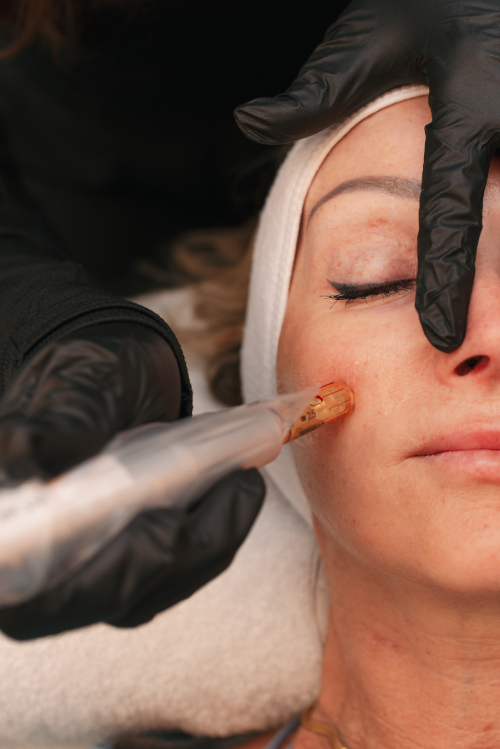
Microneedling, sometimes referred to as collagen induction therapy, is a cosmetic procedure that uses a device equipped with tiny, sterile needles to create controlled micro-injuries in the skin.
While the idea of needles may sound intimidating, these micro-injuries are precisely what encourage the skin’s natural repair process.
As the skin heals, it stimulates the production and remodeling of collagen and elastin, two proteins that help maintain the skin’s structure, firmness, and elasticity.
As a result, microneedling may help improve skin texture, soften the appearance of certain scars, and reduce the visibility of fine lines over time.
Unlike treatments that primarily exfoliate the skin’s surface, microneedling works by stimulating a healing response within the skin.
Traditional microneedling treatments can also be customized with targeted serums based on your unique skin concerns and goals. Depending on the device and treatment protocol, specially formulated serums may be applied during treatment, allowing compatible ingredients to reach the microchannels created by the microneedling pen. Whether your focus is hydration, uneven skin texture, or overall skin rejuvenation, your provider can select an appropriate serum to complement your treatment.
What Does Microneedling Help Treat?
One of the most common questions patients ask is: What is microneedling actually good for?
Depending on your skin type, concerns, and treatment plan, traditional microneedling may help improve the appearance of:
- Acne scars: Particularly certain depressed or atrophic acne scars
- Fine lines and wrinkles: By supporting collagen remodeling
- Uneven skin texture: Helping the skin appear smoother over time
- Enlarged pores: Improving the appearance of pores, although it cannot permanently change their size
- Stretch marks and scars: Helping soften their appearance through collagen remodeling
- Overall skin quality: Supporting a smoother, more refreshed appearance
It’s important to remember that not all skin concerns respond to microneedling in the same way. The type and severity of scarring, your skin’s condition, and the treatment approach can all influence your results.
Does Microneedling Help With Acne Scars?
If you’ve been searching for acne scar treatments in Edmonton, microneedling may be one option worth exploring.
Acne scars can develop when inflammation from acne damages the skin and disrupts normal collagen production during healing.
Some acne scars leave behind depressions or uneven texture, which can become more noticeable under certain lighting.
Microneedling stimulates collagen remodeling, which may gradually improve the appearance of certain depressed acne scars.
However, not all acne scars are the same.
Rolling scars, boxcar scars, and ice-pick scars differ in depth and structure. Some may respond to microneedling, while others may require a different treatment or combination of procedures.
It’s also important to distinguish between true acne scarring and the red or brown marks that can remain after breakouts. These concerns may require different treatment approaches.
A consultation can help determine whether traditional microneedling, RF microneedling, or another procedure is appropriate for your skin.
What Is Potenza RF Microneedling?
Now that we’ve covered traditional microneedling, you may be wondering how Potenza RF microneedling compares.
Potenza combines traditional microneedling with radiofrequency (RF) energy to stimulate collagen and elastin remodeling within the skin.
Like traditional microneedling, Potenza uses fine needles to create controlled micro-injuries.
However, Potenza also delivers radiofrequency energy through the needles into targeted layers of the skin, producing controlled heat within the tissue.
This combination of mechanical stimulation and thermal energy is designed to promote collagen remodeling and tissue tightening.
At Stratica Dermatology, Potenza RF microneedling is available at our St. Albert clinic.
What Does Potenza RF Microneedling Treat?
Depending on your skin, treatment settings, and individual goals, Potenza may be considered for concerns such as:
- Acne scars and uneven skin texture
- Fine lines and wrinkles
- Skin laxity
- Enlarged or visible pores
- Scars and stretch marks
- Overall skin rejuvenation
One of the reasons patients explore Potenza is its ability to deliver RF energy at selected depths, allowing providers to customize treatment based on the area and concern being addressed.
However, RF microneedling is not necessarily the best option for every patient, and more intensive treatment does not automatically mean better results.
Traditional Microneedling vs. Potenza RF Microneedling: What’s the Difference?
If you’ve been comparing traditional microneedling vs. RF microneedling, the biggest difference is how the treatments stimulate the skin.
Traditional microneedling relies on controlled mechanical micro-injuries to initiate collagen remodeling. Depending on the device and treatment protocol, targeted serums may also be incorporated into the treatment, allowing compatible ingredients to reach the microchannels created in the skin.
Potenza RF microneedling combines those micro-injuries with radiofrequency energy to generate controlled heat within the skin.
Both treatments may improve skin texture and certain types of acne scarring, but they are not interchangeable.
| Traditional Microneedling | Potenza RF Microneedling |
| Uses fine needles to create controlled micro-injuries | Combines fine needles with radiofrequency energy |
| Stimulates the skin’s natural collagen remodeling process | Stimulates collagen remodeling through mechanical injury and controlled thermal energy |
| Can incorporate targeted serums based on individual skin goals | Uses radiofrequency energy to stimulate collagen remodeling |
| May help improve acne scars, texture, and fine lines | May help improve acne scars, texture, fine lines, and skin laxity |
| Typically involves temporary redness and sensitivity | May involve redness, swelling, sensitivity, sandpaper effect, and grid marks |
| Often performed as a series | Often performed as a series |
Is Potenza Better Than Traditional Microneedling?
Not necessarily.
The best treatment depends on what you’re hoping to improve.
Traditional microneedling may be appropriate for patients primarily concerned with uneven texture, certain acne scars, or early signs of skin aging.
Potenza may be considered when additional tissue tightening or RF-assisted collagen remodeling is part of the treatment goal.
However, factors such as your medical history, skin type, scarring, treatment area, and tolerance for downtime all influence which procedure is appropriate.
RF microneedling also carries risks associated with thermal energy, including burns, pigmentation changes, scarring, and, in some cases, unintended fat loss. Careful patient selection and appropriate treatment settings are important.
A consultation allows your provider to assess your skin and explain the potential benefits and limitations of each treatment.
Frequently Asked Questions About Microneedling
Does Microneedling Hurt?
This is understandably one of the first questions patients ask when considering microneedling.
Although the treatment involves tiny needles, a topical numbing cream is typically applied beforehand to help minimize discomfort.
During treatment, you may feel pressure, vibration, or a scratching sensation as the device passes over the skin.
Some areas may feel more sensitive than others, and the level of discomfort can vary depending on the treatment depth, area being treated, and individual sensitivity.
Your provider will explain what to expect and take steps to make the treatment as comfortable as possible.
How Long Does a Microneedling Treatment Take?
If you’re wondering how to fit microneedling into your schedule, appointments typically take approximately 45 to 60 minutes, including preparation and treatment.
The exact appointment length may vary depending on the area being treated and your individualized treatment plan.
What Is the Downtime After Microneedling?
Another frequently searched question is: How long does microneedling take to heal?
Traditional microneedling generally involves relatively limited downtime compared with more intensive resurfacing procedures.
Following treatment, your skin may appear red or feel warm, similar to a mild sunburn.
Common temporary effects may include:
- Redness and sensitivity
- Mild swelling
- Tightness or dryness
- Temporary sandpaper effect and flaking
For many patients, visible redness improves within approximately 24 to 72 hours, although recovery varies depending on treatment intensity and individual skin response.
All of these effects can last up to 5 days.
Your skin may remain sensitive for several days as it heals.
Is There Downtime After Potenza RF Microneedling?
Yes, although recovery varies based on treatment intensity, settings, and the area being treated.
Following Potenza, patients may experience temporary redness, swelling, warmth, sensitivity, or small pinpoint marks.
It is also normal to experience temporary grid-like marks on the skin following Potenza RF microneedling. These marks can remain visible for approximately 5 to 7 days after treatment as the skin heals. Recovery times vary depending on the treatment settings and individual skin response.
Some patients experience relatively short periods of visible downtime, while others may need additional recovery time.
Your provider will discuss the expected healing process and provide aftercare instructions specific to your treatment.
What Should You Avoid After Microneedling?
Proper aftercare is an important part of the treatment process.
Your provider may recommend temporarily avoiding strenuous exercise, excessive heat, direct sun exposure, exfoliating products, retinoids, and certain active skincare ingredients.
Gentle skincare and sun protection are especially important while the skin barrier recovers.
Always follow the specific aftercare instructions provided by your treatment provider, as recommendations may vary depending on the procedure performed.
How Many Microneedling Sessions Do You Need to See Results?
While some patients may notice changes in their skin following one treatment, microneedling is often performed as a series to achieve gradual improvements.
The number of sessions recommended depends on several factors, including:
- The concern being treated
- The depth and severity of acne scarring
- Your skin type and condition
- Your treatment goals
- How your skin responds
For many patients, a series of approximately three to six treatments, often spaced four to six weeks apart, may be considered. However, this is not a universal treatment plan.
Because collagen remodeling takes time, improvements typically develop gradually over the weeks and months following treatment.
Your provider can recommend an appropriate treatment schedule based on your individual needs.
When Is the Best Time of Year to Get Microneedling?
Microneedling can be performed year-round, including during the summer months, making it a convenient treatment option regardless of the season.
Unlike certain laser treatments that target pigment or colour within the skin, traditional microneedling and Potenza RF microneedling do not specifically target melanin or a tan. Instead, they work by stimulating the skin’s natural healing response and collagen remodeling.
However, diligent sun protection is still essential before and after microneedling, regardless of the season. Freshly treated skin can be more sensitive to UV exposure, making proper sun protection especially important during the healing process.
Whether you’re considering traditional microneedling or Potenza RF microneedling, your provider will review your skin condition, recent sun exposure, and aftercare recommendations to determine whether treatment is appropriate.
Can Microneedling Make Acne Scars Worse?
When performed appropriately, microneedling is used to improve the appearance of certain acne scars. However, complications such as infection, pigmentation changes, or scarring are possible. Treatment may not be suitable for patients with active inflammatory acne or certain skin conditions.
Can You Wear Makeup After Microneedling?
Your provider will typically recommend avoiding makeup for a period following treatment, often at least 24 hours, depending on the procedure and how your skin is healing.
How Long Do Microneedling Results Last?
Results vary depending on your skin concerns, age, lifestyle, and treatment plan. Collagen remodeling can provide improvements that persist for months or longer, but natural skin aging continues. Maintenance treatments may be recommended.
Can Microneedling Be Done on All Skin Tones?
Microneedling may be suitable for a wide range of skin tones. However, the risk of post-inflammatory hyperpigmentation and other complications must still be considered, particularly with RF-based treatments. An individualized assessment is important.
Is Microneedling Safe?
Microneedling is generally considered safe when performed by appropriately trained professionals using suitable equipment and infection-control procedures. However, it is not risk-free. Potential complications include infection, pigmentation changes, prolonged irritation, and scarring.
Can You Get Microneedling if You Have Active Acne?
Microneedling is generally avoided over active inflammatory or infected acne lesions because treatment may worsen irritation or increase the risk of complications. Your provider may recommend managing active acne before addressing residual scarring.
Looking for Microneedling in Edmonton or St. Albert?
Whether you’ve been searching for microneedling in Edmonton, microneedling for acne scars, skin rejuvenation treatments, or Potenza RF microneedling in St. Albert, the first step is understanding which treatment is appropriate for your skin.
At Stratica Dermatology, we offer traditional microneedling and Potenza RF microneedling at our St. Albert location, with treatment plans tailored to your individual skin concerns and goals.
Whether you’re looking to improve the appearance of acne scars, soften fine lines, address uneven skin texture, or explore options for skin rejuvenation, our cosmetic team can help you understand your options.
Book a cosmetic consultation at Stratica Dermatology in St. Albert to learn more about microneedling and determine which treatment may be right for you.
Results vary. Treatment suitability, number of sessions, downtime, and outcomes depend on individual factors. All cosmetic procedures carry potential risks.