As summer comes to an end and the days get shorter, you may start hearing the term “laser season.” But what exactly is laser season, and why does the time of year matter when it comes to laser skin treatments?
Fall and winter are popular times to consider laser treatments in Edmonton and St. Albert because we typically experience less sun exposure during the cooler months. Since many laser procedures require careful sun protection before and after treatment, this can make fall and winter an ideal time to explore pigmentation treatments, sun spot treatments, acne scar treatments, skin resurfacing, and laser treatments for sun damage.
After a summer spent outdoors, you may also start noticing concerns that weren’t as visible before, including brown spots, age spots, uneven skin tone, sun damage, pigmentation, fine lines, and changes in skin texture.
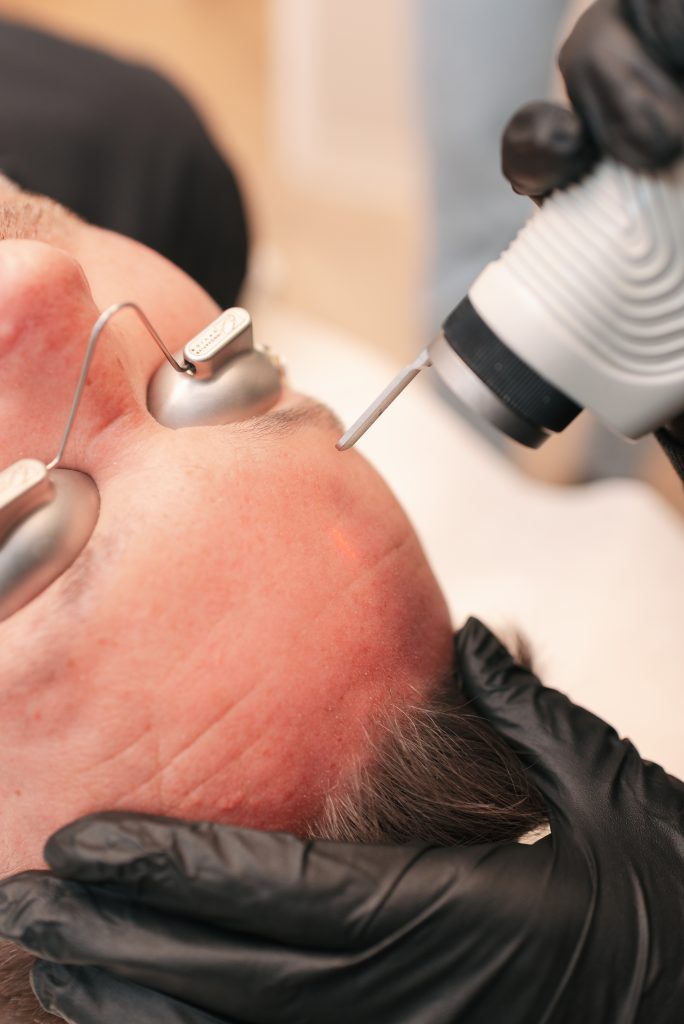
At Stratica Dermatology, we offer a variety of laser skin treatments in Edmonton and St. Albert, including PicoSure Pro and UltraPulse CO2 resurfacing laser. While both can be incorporated into a skin rejuvenation plan, they work differently and are designed to address different concerns.
So, if you’ve spent the summer noticing new sun spots, thinking about improving acne scars, or searching for the best laser treatment for pigmentation or sun damage, laser season can be a great time to start exploring your options.
What Is Laser Season?
Laser season generally refers to the fall and winter months, when UV exposure is lower and most people naturally spend less time outdoors in direct sunlight.
Many cosmetic laser treatments require patients to minimize sun exposure before and after treatment. Recently tanned or sun-exposed skin can also affect whether certain laser procedures are appropriate at a particular time.
This is why you’ll often hear fall and winter described as the best time of year for laser treatments. It’s not necessarily because laser treatments can only be performed during these months. Rather, the cooler seasons can make it easier to follow sun protection recommendations and plan around the healing process.
Fall can also be a convenient time to start if your provider recommends a series of laser treatments spaced several weeks apart, giving you time to work through your treatment plan before the sunnier months return.
In other words, sweater weather can also be skin treatment weather.
Why Does Sun Exposure Matter With Laser Treatments?
You may be wondering, can you get laser treatments in the summer? Depending on the treatment, the answer may be yes, but your recent sun exposure matters.
Certain laser treatments can be performed throughout the year, while others may not be appropriate on recently tanned or sun-exposed skin. Your provider will consider your skin type, treatment area, recent sun exposure, the concern being treated, and the type of laser being used before recommending treatment.
After certain procedures, the skin may also be temporarily more sensitive while it heals, making diligent sun protection especially important.
With Edmonton and St. Albert’s shorter days and cooler weather, fall and winter can simply make avoiding unnecessary UV exposure a little easier. For more intensive procedures, such as the CO2 laser, it may also be more convenient to plan for downtime during the cooler months.
Regardless of the season, daily sun protection remains an important part of caring for your skin before and after laser treatments.
What Can Laser Treatments Treat?
One of the most common questions patients have when researching laser treatments in Edmonton is simply: what can laser treatments actually help with?
There isn’t one laser that is best for every skin concern. Different technologies use different wavelengths and methods of delivering energy into the skin, allowing your provider to recommend a treatment based on what you’re trying to address.
Patients may seek laser treatments for concerns including sun damage, pigmentation, brown spots, age spots, sun spots, uneven skin tone, acne scars, fine lines and wrinkles, uneven skin texture, redness, visible blood vessels, signs of aging, and tattoos.
For example, someone looking for a pigmentation treatment or sun spot treatment may require a very different laser than someone primarily concerned with deeper acne scarring or skin texture.
This is also why choosing between treatments such as PicoSure Pro and CO2 laser isn’t as simple as deciding which laser is “better.” The right treatment depends on your skin, your concerns, your goals, and how much downtime you’re comfortable with.
PicoSure Pro: Pigmentation & Sun Spot Treatments in Edmonton
If summer left behind a little more pigmentation than you wanted, fall may be a good time to have your skin assessed.
Patients searching for pigmentation treatments in Edmonton, sun spot treatments, brown spot treatments, or laser treatments for sun damage may come across PicoSure Pro.
PicoSure Pro is an advanced picosecond laser that delivers extremely short pulses of energy to address specific concerns within the skin. When treating unwanted pigmentation, the laser targets pigment and breaks it into smaller particles that can gradually be cleared by the body.
So, what does PicoSure Pro treat? Depending on your skin and individualized treatment plan, PicoSure Pro may be used to address concerns such as pigmentation, sun damage, brown spots, age spots, sun spots, uneven skin tone, acne scars, skin texture, fine lines, overall skin rejuvenation, and tattoo removal.
If you’re specifically wondering, does PicoSure Pro treat pigmentation, dark spots, age spots or sun spots? This is one of the areas PicoSure Pro is particularly known for. It may be used to target certain types of unwanted pigmentation, including some brown spots and sun-related pigmentation.
However, pigmentation can have many different causes, and not every dark or pigmented spot should automatically be treated cosmetically. Having the area properly assessed first is an important step in determining whether a laser pigmentation treatment is appropriate.
More Than a Pigmentation Treatment
Although PicoSure Pro is well known for pigmentation treatment and tattoo removal, those aren’t its only uses.
PicoSure Pro can also stimulate processes associated with collagen and elastin production, which is why it may be incorporated into treatment plans focused on skin texture, fine lines, acne scars, and overall skin quality.
Patients researching acne scar treatments in Edmonton may also wonder whether PicoSure Pro can help. It may be an option for certain types of acne scars and uneven texture, but acne scarring can vary significantly in type, depth, and severity.
Some scars may respond well to PicoSure Pro, while others may benefit from a more intensive resurfacing treatment such as CO2 or a combination of different treatments.
What Is PicoSure Pro Downtime Like?
For many patients, downtime is an important part of choosing a laser treatment.
Downtime following PicoSure Pro varies depending on what is being treated and the settings used, but many PicoSure Pro treatments involve relatively minimal downtime. Temporary redness, sensitivity, or other short-term skin changes may occur following treatment.
This can make PicoSure Pro an option worth discussing for patients looking for skin rejuvenation or pigmentation treatments with less downtime than more intensive resurfacing procedures.
Your provider will review what you can expect based on your specific treatment and provide individualized aftercare instructions.
UltraPulse CO2 Laser Resurfacing in Edmonton
While PicoSure Pro can be a great option when concerns such as pigmentation and overall skin quality are a priority, some patients are looking for a more intensive skin resurfacing treatment.
That’s where CO2 laser resurfacing may come in.
At Stratica Dermatology, we use the UltraPulse CO2 laser for advanced skin resurfacing. CO2 laser resurfacing creates controlled areas of injury within the skin, triggering the body’s natural healing response and stimulating collagen remodeling.
As the skin heals, this process can help improve the appearance and texture of the treated area.
So, what does CO2 laser resurfacing treat? Depending on your skin and treatment plan, CO2 may be considered for concerns such as acne scarring, fine lines and wrinkles, uneven or rough skin texture, signs of sun damage, certain pigmentation concerns, visible signs of aging, and overall skin resurfacing and rejuvenation.
CO2 Laser for Acne Scars, Texture & Wrinkles
If you’ve been searching for acne scar treatments in Edmonton or wondering what the best laser is for acne scars, it’s important to remember that acne scars are not all the same. Their depth, type, and severity can influence which treatment is most appropriate.
CO2 laser resurfacing may be recommended for certain types of acne scarring, particularly when uneven texture or deeper resurfacing is a primary treatment goal. Other patients may benefit from a different procedure or combination of treatments.
CO2 laser can also be used to address fine lines, wrinkles, rough texture, and other visible signs of skin aging. By stimulating the skin’s healing response and collagen remodeling, treatment can help improve the overall appearance and texture of the skin over time.
For patients researching skin resurfacing in Edmonton, CO2 may therefore be one option considered when the treatment goal extends beyond surface-level pigmentation.
How Much Downtime Is There After CO2 Laser?
If you’re considering CO2, you’re probably also wondering: how long does CO2 laser take to heal?
CO2 laser resurfacing is a more intensive procedure and generally involves more downtime than treatments such as PicoSure Pro. The amount of recovery required varies depending on the depth of treatment, area being treated, settings used, and your individual skin response.
Because the healing process is more significant, your provider will review what to expect, how to care for your skin, and what you should avoid before and after your treatment.
The recovery period is also one of the reasons many patients prefer to schedule CO2 laser treatments during fall or winter. Cooler weather, less time spent in direct sunlight, and more time before summer returns can make it easier to plan around treatment and recovery.
PicoSure Pro vs. CO2 Laser: Which One Is Right for You?
If you’ve been researching laser treatments Edmonton, you may have found yourself comparing PicoSure Pro vs. CO2 laser resurfacing.
While both treatments can improve the appearance of the skin, they work differently and aren’t interchangeable.
PicoSure Pro may be considered when concerns such as pigmentation, brown spots, sun spots, sun damage, uneven tone, certain acne scars, texture, or overall skin rejuvenation are the focus. Depending on the treatment performed, it can also be an appealing option for patients looking for less downtime.
CO2 laser resurfacing is a more intensive treatment that may be considered when deeper resurfacing is desired, particularly for concerns such as acne scarring, more significant texture irregularities, fine lines, wrinkles, and visible signs of aging.
So, if you’re asking which laser is better for pigmentation, which laser is best for sun spots, whether PicoSure Pro or CO2 is better for acne scars, or which laser treatment has less downtime, there isn’t one answer that applies to everyone.
For certain unwanted pigmentation, PicoSure Pro may be considered because of its ability to specifically target pigment. For deeper texture concerns and certain types of acne scarring, CO2 resurfacing may be considered. When downtime is a major consideration, certain PicoSure Pro treatments may involve less recovery than a more intensive CO2 treatment.
Rather than choosing a laser based on the name of your concern alone, your provider can assess what type of pigmentation, scarring, texture, or sun damage you actually have and recommend a treatment accordingly.
How Many Laser Treatments Will I Need?
Another common question is whether one laser treatment is enough.
The number of treatments required depends on the concern being treated, your skin, the technology being used, treatment intensity, and how your skin responds. Some concerns may improve following a single treatment, while others may require a series of laser treatments spaced several weeks apart.
This is another advantage of beginning your treatment plan during laser season. Starting in the fall or winter can give you more time to complete a recommended series before spring and summer.
You also don’t need to know exactly which laser—or how many treatments—you need before booking an appointment. A cosmetic consultation allows your provider to assess your skin type, pigmentation, sun damage, acne scarring, texture, signs of aging, treatment goals, and desired downtime before recommending an appropriate treatment plan.
Looking for Laser Treatments in Edmonton or St. Albert?
Whether you’ve been searching for laser treatments Edmonton, laser treatments St. Albert, pigmentation treatments Edmonton, sun spot treatments, acne scar treatments, laser treatments for sun damage, or skin resurfacing in Edmonton, the most important step is determining which treatment is appropriate for your skin.
Stratica Dermatology offers a variety of cosmetic laser treatments at our Edmonton and St. Albert locations, including advanced technologies such as PicoSure Pro and UltraPulse CO2 laser resurfacing.
Whether your goal is to address pigmentation, sun damage, brown spots, sun spots, acne scars, uneven skin texture, fine lines, wrinkles, or overall skin rejuvenation, your treatment plan should be based on your individual skin, concerns, goals, and desired downtime.
Summer may be ending, but laser season is just getting started. 🍂
Book a complimentary cosmetic consultation at Stratica Dermatology in Edmonton or St. Albert to have your skin assessed and find out which laser treatment may be right for you.